

Skin Thinning: What It Actually Is, Why It Happens, and What Helps
For years, I thought "anti-aging" just meant wrinkles. Fine lines, crow's feet, the usual suspects. It wasn't until I started digging into why some skin ages so differently from other skin that I found the piece nobody talks about: skin thinning.
It's not as photogenic a topic as wrinkles. There's no single "before and after" wrinkle you can point to. But skin thinning is quietly behind a lot of what we blame on aging — the fragility, the way skin starts to tear or bruise more easily, the sagging that no amount of "firming cream" seems to touch. Once I understood it, a lot of my skincare routine stopped making sense, and I had to rebuild it around this instead.
What is skin thinning, actually?
Skin thinning happens mainly in that dermis layer — as collagen and elastin break down faster than your body replaces them, the dermis gets thinner, and skin loses the density that keeps it firm, bouncy, and resistant to damage.
This is the part that reframed everything for me: skin thinning isn't just one symptom sitting alongside wrinkles and sagging — it's the root cause behind most of them. As the dermis loses collagen and elastin, it can no longer hold skin taut from underneath, and that loss of structural support is what shows up on the surface as fine lines, wrinkles, and sagging. Those visible signs are downstream results, not separate problems — which is part of why treating wrinkles in isolation, without addressing the density loss underneath, tends to hit a ceiling.
It's not just the dermis, either. The epidermis — the outer layer of skin — thins too. And when it thins, it gets worse at holding onto moisture, so more water escapes through it. This is called transepidermal water loss, or TEWL — basically, water evaporating out through your skin instead of staying locked in. That's why thinning skin so often feels dry and reactive, not just less firm — the barrier itself is weaker, not just the layer underneath it. The two problems feed each other: a weaker barrier lets in more irritants and loses more moisture, and drier skin is more vulnerable to the kind of damage that breaks down collagen even further.

Why does skin thin i![]() n the first place?
n the first place?
A few things drive it, and most of them compound each other:
Age. Collagen production starts declining by about 1% a year starting in your 20s. By the time you notice it, you've usually lost a meaningful amount already.
Hormonal changes. Menopause is a big accelerant — research shows skin can lose up to 30% of its collagen in just the first five years. This is part of why skin thinning often becomes suddenly noticeable in a fairly short window, rather than a slow fade.
Sun exposure. UV damage breaks down collagen and elastin directly and is considered one of the largest external contributors to skin thinning over a lifetime — arguably bigger than age itself.
Smoking and pollution. Both accelerate oxidative stress, which damages the collagen and elastin fibers that give skin its structure.
High sugar intake. Excess sugar triggers advanced glycation end products (AGEs), which make collagen stiff and brittle rather than flexible — a process that actively works against skin's resilience.
Chronic stress. Elevated cortisol weakens skin over time, on top of everything else it does to sleep and overall health.
Certain medications. Corticosteroids, blood thinners, and some anti-inflammatory drugs are known to thin skin as a side effect.
Why skin thinning deserves more attention than it gets
Here's what changed my thinking: most of the "gold standard" anti-aging ingredients — potent retinoids, high-concentration acids, pure ascorbic acid — work by aggressively resurfacing or stimulating skin. That's genuinely effective for a lot of people. But if your skin is already thin or reactive, that same aggressive approach can compromise the barrier further, rather than help rebuild what's actually been lost.
This is part of why some populations show visibly different aging patterns. Asian skin, for example, tends to have a notably thicker dermis and a higher baseline of collagen, which is one of the reasons it's often associated with slower visible signs of aging — not because the skin doesn't age, but because it starts from a denser foundation and loses less of it, proportionally, over the same number of years. That observation is actually what shaped how I think about skincare now: instead of chasing potency, the goal became building and protecting density.
Can you actually do anything about it?
Yes — but the approach is different from a typical "anti-wrinkle" routine. Rebuilding and protecting skin density comes down to four things working together, not any single hero ingredient:
1. Support collagen, gently. Retinoids stimulate collagen production effectively, but can be too aggressive for skin that's already thin or sensitized. Bakuchiol is a gentler route to a similar outcome — it's been shown to produce comparable improvements to retinol in fine lines and skin thickness, with meaningfully less irritation along the way.
2. Reinforce the barrier. As skin loses collagen, it needs a stronger outer layer to protect it. Ceramides, cholesterol, and fatty acids make up the "mortar" that holds skin cells together — most Western formulas use three ceramides; look for five if y
3. Hydrate deeply, not just on the surface. Thinning skin loses water more easily (transepidermal water loss), so it needs both humectants (to draw in moisture) and occlusives (to seal it in) — not just one or the other.
4. Protect against further loss. Daily sunscreen is the single highest-leverage thing you can do, since UV damage is such a large driver of collagen breakdown. Antioxidants layered underneath add a second line of defense against the free-radical damage that compounds it.
Can you actually reverse skin thinning? Before and after
Most medical sources will tell you skin thinning can't be fully reversed — and that's true in the strictest sense. But "can't be reversed" and "can't be visibly improved" are two different claims, and I think the first one gets used to justify giving up on the second too easily.
Here's what a consistent routine built around the four pillars above actually looks like over time: in the first few weeks, the difference is mostly about resilience — less redness, fewer flare-ups, skin that bounces back faster after a long day. By 8–12 weeks, most people notice visibly smoother texture and a plumper look, since better hydration and barrier function show up first. The deeper change — actual density and firmness — is a slower build, typically 3–6 months of consistency, because that's genuinely how long collagen remodeling takes.
That timeline matters because it's the opposite of what most "before and after" skincare content promises. There's no dramatic 2-week transformation here. What there is: skin that's measurably more resilient, less reactive, and visibly firmer than where it started — as long as you stick with it and never skip sun protection, since UV damage can undo months of progress in a single unprotected season.

Frequently asked questions
Is skin thinning reversible? Not completely, in the sense of restoring skin to exactly what it was decades earlier. But visible improvement is realistic — better hydration, stronger barrier function, and measurable increases in firmness and texture are all achievable with consistent care, even if full dermal thickness isn't fully restored.
What is the main cause of skin thinning? Collagen and elastin breakdown is the core mechanism, but it's driven by multiple factors at once: natural aging, cumulative sun exposure, hormonal changes (especially menopause), and lifestyle factors like smoking, high sugar intake, and chronic stress.
Can skincare products really help with skin thinning, or does it require medical treatment? Both have a role. Topical ingredients like bakuchiol, ceramides, and gentle vitamin C derivatives can meaningfully support collagen, barrier function, and hydration at home. More aggressive medical options (lasers, microneedling, prescription retinoids) work faster but carry more risk of irritation — which matters more if your skin is already thin and reactive. For most people, a consistent, barrier-respecting routine is the sustainable starting point.
What this looks like in a real routine
I didn't want a routine that required a chemistry degree to follow, so here's how I built mine around these four pillars:
Start with a pH balanced cleanser for sensitive skin — thinning, barrier-compromised skin can't afford a cleanser that strips it further before anything else even gets a chance to help.
Follow with a gentle vitamin C essence for antioxidant protection without the irritation of straight ascorbic acid — this is where the "protect" pillar starts.
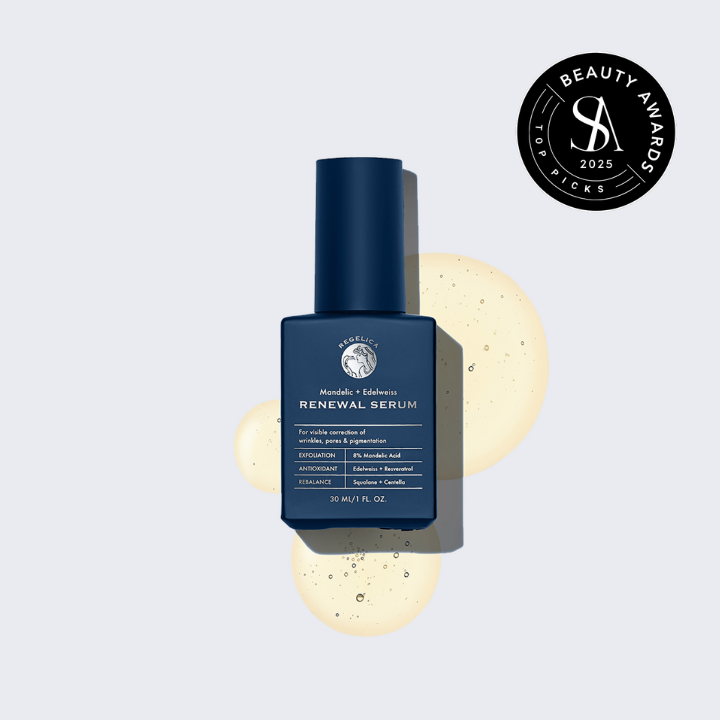
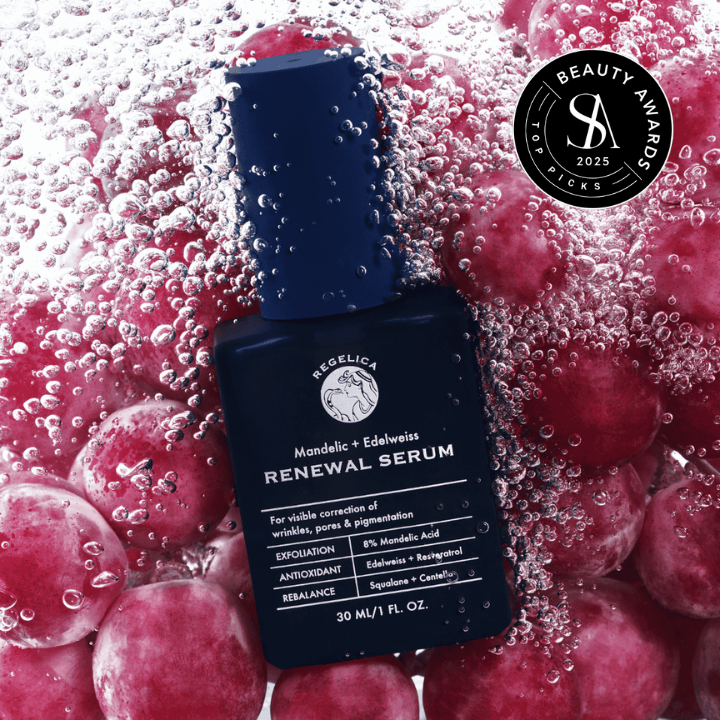
Layer in a mandelic acid serum for gentle renewal — mandelic acid's larger molecule size means slower penetration and less irritation than harsher acids, so it supports turnover without working against a barrier that's already under strain.
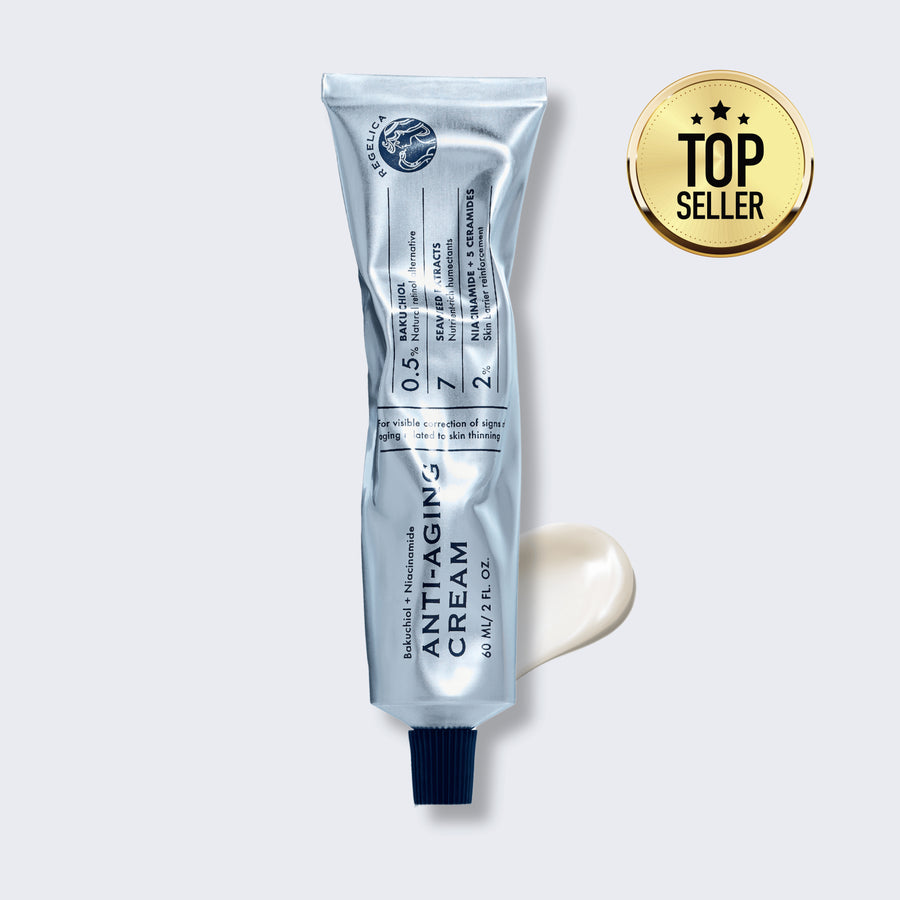
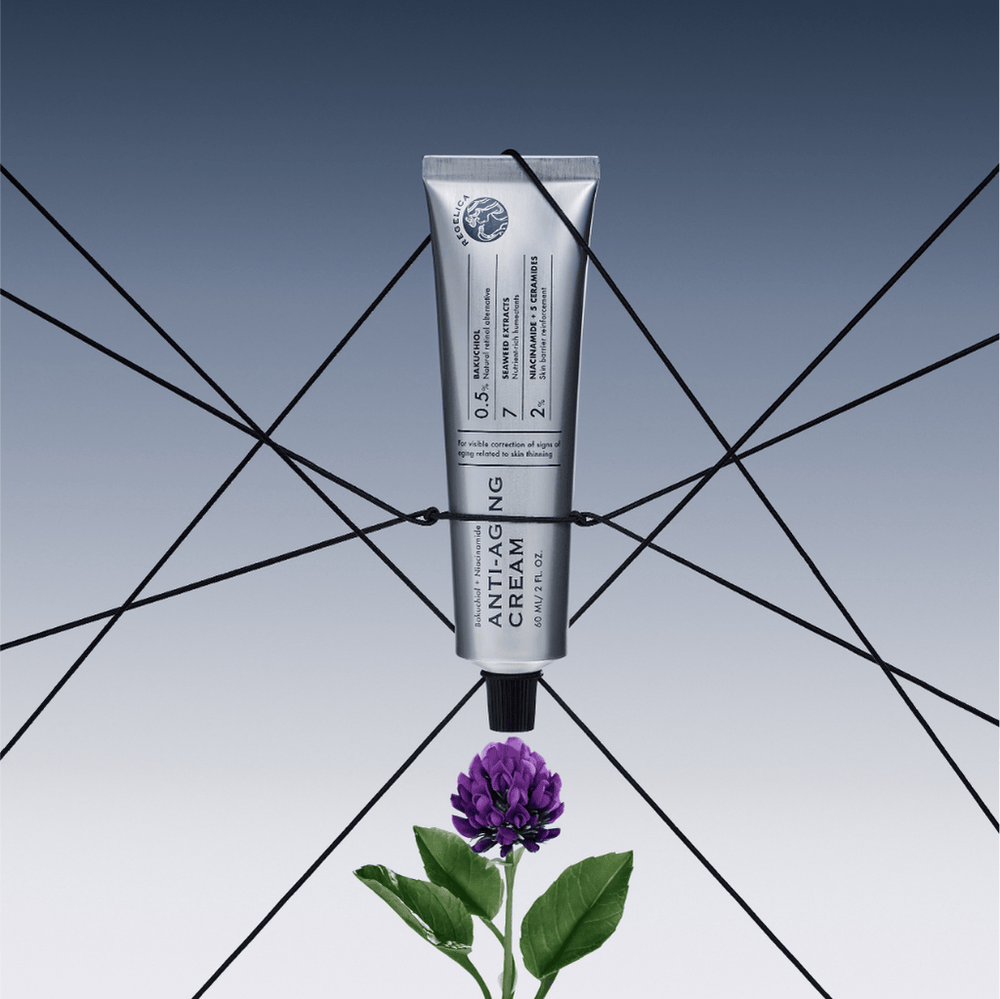
Finish with a bakuchiol cream that combines collagen support, ceramides, and hydration in one step — the "boost collagen, reinforce barrier, hydrate" pillars, all at once, rather than three separate products fighting each other.
And every morning: sunscreen. Non-negotiable, no matter how good the rest of the routine is.
The bottom line
Skin thinning isn't as visually obvious as a wrinkle, which is probably why it gets so much less attention — but it's arguably the more foundational problem. You can spend years chasing fine lines with aggressive actives and still end up with thinner, more fragile skin than when you started, if the routine isn't also protecting and rebuilding density along the way. Once I stopped treating "anti-aging" as synonymous with "aggressive," my skin actually started building resilience instead of just fighting symptoms.
Curious how a full routine built around skin density works in practice? Explore the Daily Essentials Set, or read more about why Asian skin tends to age differently — the research that started this whole approach.